A practical starting point for leadership teams that know they need to digitalise, but not which project should come first.
In short
Start digital transformation with a business problem, not a technology. Pick two or three processes where manual work, errors or slow customer service cost the most, fix the data and system foundations they need, and deliver a first working improvement within a few months. Measure the result, then use what you learn to choose the next step.
For many mid-sized companies, digital transformation sounds like something for corporations with large IT departments. In practice, the pressure is the same: customers expect self-service, staff spend hours moving data between systems, and competitors use data and AI to work faster. This guide is written by Devies, a Gothenburg-based product and engineering consultancy, for CEOs, COOs and IT managers at companies with roughly 50 to 500 employees who want to move from intention to action. It defines the terms, shows where European companies stand, and gives a step-by-step way to start.
What does digital transformation mean for a mid-sized company?
Digital transformation is the change in how a company works and creates value when it systematically uses digital tools, data and software, not just the purchase of new systems. For a mid-sized company it usually means fewer manual steps, better use of the data it already has, and digital services for customers and partners.
Three terms are often mixed up, and separating them helps when setting priorities:
Term
What it is
Example
Digitisation
What it is
Turning analogue information into digital form
Example
Scanning paper invoices into PDFs
Digitalisation
What it is
Using digital tools to improve an existing process
Example
Invoices read automatically and posted in the finance system
Digital transformation
What it is
Changing how the business works or earns money with digital means
Example
Customers order, track and pay in a self-service portal, and sales focuses on advice
Most companies need all three, in that order of maturity. The mistake is to stop at digitisation, buying tools and scanning documents, and to call it transformation. The value comes when processes, roles and decisions change.
Where do European companies stand today?
As of October 2026, the latest Eurostat figures show that many smaller companies still lack basic digital capabilities, while Swedish businesses are above the EU average in AI use. The gap is a risk for those who wait, and an opportunity for those who move.
According to Eurostat's Digitalisation in Europe 2026, 71 percent of EU small and medium-sized enterprises reached at least a basic level of digital intensity in 2025, around 20 percentage points below the EU target of more than 90 percent by 2030. The same publication reports that 20 percent of EU businesses used AI in 2025, up from 13 percent in 2024, and that 35 percent of Swedish businesses did, behind Denmark and Finland. The 2030 targets are part of the EU's Digital Decade programme.
For a Swedish mid-sized company, the conclusion is not that everyone else is ahead. It is that the basics, connected systems, reliable data and automated routine work, are now the norm customers and partners expect, and that AI only pays off once those basics are in place.
How to start digital transformation, step by step
The most reliable way to start is to choose a few high-value processes, map how they work today, fix the foundations they depend on and deliver a first improvement quickly. These eight steps give a mid-sized company a concrete plan for its digitalisation (digitalisering företag) work.
- Set two or three business goals. For example: halve order handling time, reduce invoice errors, or let customers find answers without calling. Goals in business terms keep the work focused.
- Map the processes behind the goals. Follow one order or one customer case from start to finish. Note every manual step, duplicate entry, spreadsheet and waiting time.
- Inventory systems and data. List the systems involved, who owns them, how they are connected and where the same data is entered twice. This usually reveals the real bottleneck.
- Pick the first initiative. Choose one improvement that is valuable, visible and achievable in a few months. A small win builds trust and funding for the next step.
- Fix the foundations it needs. That might be an integration between ERP and CRM, a cleaned-up customer register, or moving an old system to the cloud. Our guide to cloud migration strategy helps decide what to move and how.
- Build in short cycles with real users. Deliver a working version early, test it with the people who will use it, and improve it. Our guide to the digital product development process describes how to go from idea to release.
- Measure the effect. Compare the agreed metric before and after. If it did not move, find out why before scaling.
- Decide the next step and the long-term direction. With one result in hand, write a simple roadmap and a data strategy. Our one-page data strategy is a good format for mid-sized companies.
Ownership matters as much as the plan. Give each initiative a business owner who is responsible for the result, not only an IT owner responsible for delivery.
What makes digitalisation efforts fail?
Digitalisation efforts usually fail because they start with technology instead of a problem, try to do too much at once, or never change the way people work. The technology is rarely the hardest part.
The most common pitfalls:
- Buying a platform first. A new ERP or CRM system does not fix unclear processes or poor data; it often makes them more visible and more expensive.
- A long programme with no early delivery. Two years of planning without results drains budgets and patience. Ship something useful within months.
- Ignoring data quality. Automation and AI built on inconsistent data produce faster mistakes. Fix data at the source.
- Leaving out the users. If the people doing the work were not involved, they will work around the new solution.
- No one owns the result. When IT owns the project and nobody in the business owns the outcome, the project is "done" but nothing improves.
Devies saw the value of delivering early with Stadsbyggnadsförvaltningen, Gothenburg's spatial planning authority, which had traffic data from many sources in different formats and quality levels. According to the case, the team built a unified data model and launched a public, interactive Traffic Catalogue before it was fully complete, then improved it based on real use. The case estimates around 400 hours saved per year in manual data validation, and describes the launch decision as what turned a stalled initiative into something people use.
Keep reading

From our work
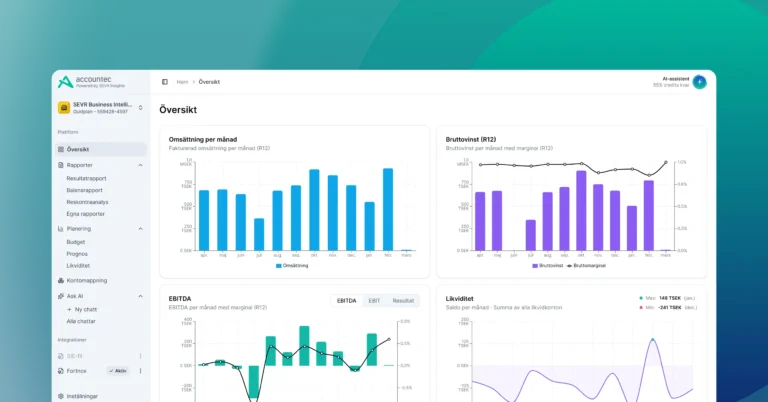 Client Case: SEVR InsightsLearn how Devies and SEVR Insights built an AI accounting platform in four months using an AI-first development process that reached 85,000 users.Read the case
Devies
Want a second opinion?
Devies, a Gothenburg-based product and engineering consultancy, works on questions like this with Nordic product and IT teams. Tell us where you are and we will suggest a sensible first step.
Frequently asked questions
Where should a mid-sized company start with digital transformation?
Start with a business problem that costs time or money today, such as slow order handling, frequent invoice errors or customers who cannot serve themselves. Map how that process works, find the manual steps and system gaps, and deliver one concrete improvement within a few months. Use the result to build support and to choose the next initiative, rather than starting with a large, company-wide programme.
How much does digital transformation cost?
There is no fixed price, because digital transformation is a series of initiatives rather than one project. A first improvement, such as an integration between two systems or an automated routine, can be delivered with a modest budget in a few months. Costs grow with the number of systems, the state of the data and how much custom software is needed. Fund one step at a time and measure its return.
What is the difference between digitalisation and digital transformation?
Digitalisation means using digital tools to improve an existing process, such as automating invoice handling. Digital transformation is broader: it changes how the company works or earns money, for example by moving customers to self-service and refocusing sales on advice. Most companies reach transformation through a series of digitalisation steps, each delivering value on its own.
Do we need AI to digitalise our company?
No. Most mid-sized companies get the largest early gains from connecting systems, removing duplicate data entry and automating routine work. AI becomes valuable once data is reliable and processes are digital, for example to classify documents, answer common questions or forecast demand. Starting with AI before those foundations are in place usually leads to impressive demonstrations that are hard to put into daily use.