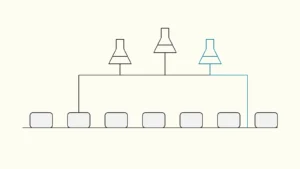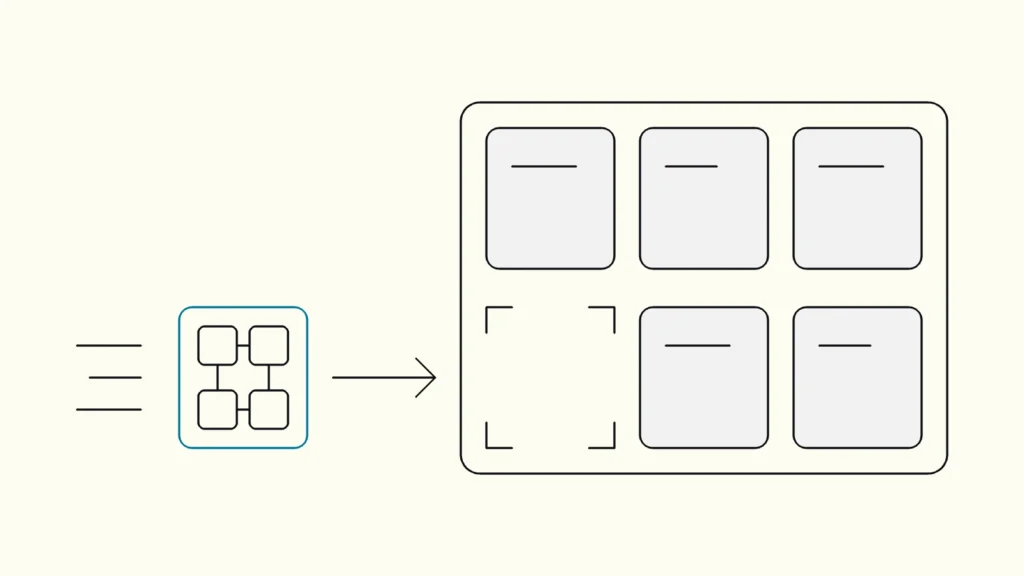
How renting a complete development team compares with hiring individual developers or recruiting your own, and what to agree before you start.
In short
Team as a service means renting a complete, cross-functional development team from a supplier, which works continuously on your product while the supplier keeps the team staffed, skilled and working well. It fits when you need delivery capacity quickly, for months or years, without recruiting. It fits less well when you need one specific skill or a fixed-scope project.
A company that needs more software built has three broad options: recruit, bring in individual consultant developers (systemutvecklare konsult), or rent a whole team. Team as a service is the third. It sits between hiring developers by the hour and handing over a fixed-price project. This comparison from Devies, a Gothenburg-based product and engineering consultancy, is for CTOs, product leaders and CEOs who are weighing renting a team against the alternatives, and who want to know what the contract and the first weeks should look like.
What is team as a service?
Team as a service is a delivery model in which a supplier provides a stable team, typically developers plus roles such as a tech lead, a designer or a tester, that works on the client's goals over a long period and is paid per period rather than per deliverable. The client sets priorities; the supplier answers for team composition, continuity and ways of working.
Three things separate it from simply hiring several consultants at once:
- The team is the unit. People are chosen to work together and are replaced by the supplier if someone leaves, without the client starting over.
- The team owns its practices. Planning, code review, testing and release routines come with the team instead of being set up from scratch.
- The team is cross-functional. The Scrum Guide describes a team that is "typically 10 or fewer people" and cross-functional, meaning the members have all the skills needed to create value each sprint. Rented teams are usually much smaller than that limit.
In Sweden, renting individual developers (hyra utvecklare) is often arranged as labour hire or as consultancy assignments. Under the Swedish Act on the Hiring Out of Employees (lag om uthyrning av arbetstagare, SFS 2012:854), a staffing company is one that employs workers to hire them out to client companies for work under the client's control and direction. Whether a given team arrangement counts as labour hire depends on the contract and on who directs the work in practice, so check it with your legal adviser if it matters to you.
Team as a service, individual developers or an in-house team?
Team as a service, individual developers and an in-house team differ mainly in how fast you get capacity, who carries the people risk and who owns the ways of working. The decision table compares them on the criteria that usually decide the choice.
Criterion
Team as a service
Individual hired developers
Recruiting an in-house team
Time to productive work
Team as a service
Weeks, the team arrives with its routines
Individual hired developers
Weeks per person, routines must be set up
Recruiting an in-house team
Months, including recruitment and onboarding
Who directs daily work
Team as a service
The team, within priorities you set
Individual hired developers
You, through your own leads
Recruiting an in-house team
You
People risk (sickness, departures)
Team as a service
Supplier replaces people
Individual hired developers
You find replacements
Recruiting an in-house team
You recruit again
Ways of working
Team as a service
Brought by the team
Individual hired developers
Defined by you
Recruiting an in-house team
Built by you over time
Management effort for you
Team as a service
Product priorities and follow-up
Individual hired developers
Planning, leading and coordinating
Recruiting an in-house team
Full line management
Cost profile
Team as a service
Steady per-period fee
Individual hired developers
Hourly or monthly per person
Recruiting an in-house team
Salaries, recruitment, tools and overhead
Knowledge retention
Team as a service
Needs a deliberate handover plan
Individual hired developers
Leaves with each person unless documented
Recruiting an in-house team
Stays in the company
Flexibility to scale
Team as a service
Change team size by agreement
Individual hired developers
Add or remove people one at a time
Recruiting an in-house team
Slow in both directions
If you are also considering a fixed-scope project, our comparison of an IT consultant, a development team or project delivery covers that option.
Choose team as a service when
- You need a working team within weeks for a product that will run for many months.
- You lack, or do not want to build yet, the leadership and routines to run developers yourself.
- The work needs several skills at once, such as backend, frontend and design.
Choose individual developers when
- You already have a functioning team and leads, and you are short of one skill or of capacity. Our guide to frontend, backend or full-stack developers helps define the role.
- The need is short or tightly defined, such as covering a parental leave.
Choose an in-house team when
- Software is the core of what you sell, and the work is long-term and steady.
- You can recruit and keep people in your market, and you want the knowledge to stay inside the company.
What do you actually pay for when renting a team?
When you rent a team you pay for delivery capacity plus the supplier's responsibility for keeping it staffed and working, not only for hours of coding. That changes how you should compare offers.
Compare like for like on these points rather than on the hourly rate alone:
- Composition. Which roles are included, and at what seniority? A team without a tech lead or tester pushes that work back to you.
- Continuity. How are departures handled, and how much notice is given? What overlap is there when someone is replaced?
- Ramp-up. How long until the team ships to production, and who pays for the learning period?
- Practices. Does the team bring code review, automated tests and a deployment pipeline, or must you provide them?
- Exit. What does handover look like, and who owns the code, documentation and accounts from day one?
Many teams also need senior technical direction above the team. If that is missing in your organisation, our comparison of an interim CTO or CTO as a service looks at that gap.
How do you make a rented team work?
A rented team works when it is treated as part of your product organisation, with a clear product owner, real access and a plan for knowledge transfer from the start. Five steps make the first months go well:
- Name one product owner on your side who sets priorities and is available every week.
- Give access on day one. Code repositories, environments, test data and the people who know the domain.
- Agree goals for the first 90 days. For example, a first release to production and a working delivery pipeline, not a number of hours.
- Review together regularly. A short monthly review of delivery, quality and team health catches problems early.
- Plan the handover from the start. Decide whether the team will run the product for years or hand it to your own developers, and work towards that.
Devies took the knowledge-transfer approach with Hedin's BI platform: the case page describes working side by side with Hedin IT, pairing on real changes and coaching in code review, logging and reusable code, to build in-house capability rather than add temporary capacity.

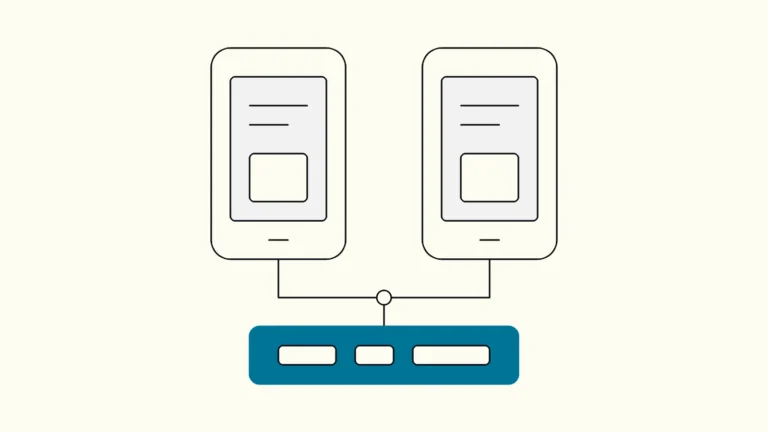


Devies
Want a second opinion?
Devies, a Gothenburg-based product and engineering consultancy, works on questions like this with Nordic product and IT teams. Tell us where you are and we will suggest a sensible first step.
Frequently asked questions
What is team as a service in software development?
Team as a service is a model where a supplier provides a complete, stable development team that works on your product over a longer period. You set the priorities and the supplier keeps the team staffed, skilled and working well, replacing people if needed. It differs from hiring individual developers because the team arrives with its own routines and works as one unit.
Is renting a development team cheaper than hiring developers?
Not necessarily per hour. A rented team often costs more per person than a salary, but you avoid recruitment time, onboarding, management overhead and the cost of empty seats when people leave. Compare the full cost of delivering the same outcome, including the time your own managers would spend, rather than comparing the hourly rate with a monthly salary.
How long does it take for a rented team to become productive?
A team that brings its own routines can usually start delivering within a few weeks, depending on how quickly it gets access to code, environments and domain experts. Complex legacy systems or strict security approvals slow this down. Agree a concrete early goal, such as a first change in production, so both sides can see when the team is up to speed.
Who owns the code when you rent a team?
Ownership is decided by the contract, so make it explicit before work starts. A common and sensible approach is that the client owns the code, documentation and accounts from the first day, and that all work happens in the client's own repositories and cloud accounts. That makes a later handover or change of supplier much simpler.