What data engineers, data analysts and data scientists actually do, how the roles depend on each other, and which one a mid-sized company should hire or buy first.
In short
Data engineering builds and runs the pipelines and platforms that make data reliable. Data analytics turns that data into reports and answers for the business. Data science builds statistical and machine learning models to predict or optimise. Most mid-sized companies need engineering and analytics first; predictive modelling pays off once reliable data and clear prediction problems exist.
Job adverts and consultancy offers use these titles loosely, and the same person may be called an analyst in one company and a data scientist in the next. That makes hiring decisions harder than they need to be. This comparison from Devies, a Gothenburg-based product and engineering consultancy, is for CEOs, CFOs and IT leaders deciding whether their next data hire or purchase should go to engineering, analytics or modelling.
What does each role do?
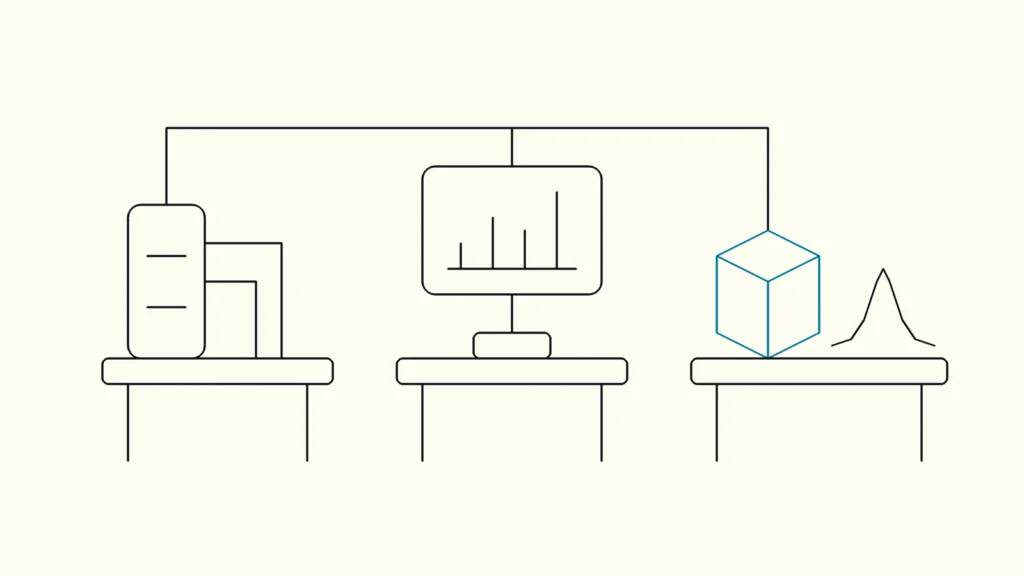
A data engineer makes data available and reliable, a data analyst answers business questions with that data, and a data scientist builds models that predict, classify or optimise. The three roles sit at different points of the same chain.
- Data engineering is the work of ingesting data from source systems, transforming it and running the platform that stores it. Microsoft's description of its Fabric data engineer certification lists ingesting and transforming data, securing and managing an analytics solution, and monitoring and optimising it, using SQL, PySpark and KQL (Microsoft Learn).
- Data analytics is the work of modelling, visualising and explaining data for decision makers. In Sweden the role is usually advertised as dataanalytiker. Microsoft's Power BI data analyst certification describes someone who works with business stakeholders on requirements, prepares and models data, and builds visualisations that enable self-service analytics (Microsoft Learn).
- Data science is the work of using statistics and machine learning to extract insight and build predictive models. The US Bureau of Labor Statistics lists data scientists' duties as determining which data are useful, collecting and analysing data, creating and validating models, and making business recommendations (BLS).
How do the three roles compare?
The roles differ most in what they deliver, which questions they answer and how quickly the business sees value. The table compares them side by side.
Criterion
Data engineer
Data analyst
Data scientist
Main deliverable
Data engineer
Pipelines, data platform, data models
Data analyst
Reports, dashboards, analyses
Data scientist
Predictive models, experiments, optimisation
Question answered
Data engineer
Is the data available, correct and on time?
Data analyst
What happened and why?
Data scientist
What will happen, and what should we do?
Typical tools
Data engineer
SQL, Python or PySpark, orchestration, cloud data platforms
Data analyst
Power BI or similar, SQL, Excel, DAX
Data scientist
Python or R, statistics, ML libraries
Depends on
Data engineer
Source systems and infrastructure
Data analyst
Reliable, modelled data
Data scientist
Reliable data and a clear prediction problem
Time to visible value
Data engineer
Weeks to months, often indirect
Data analyst
Days to weeks
Data scientist
Months, uncertain until tested
Risk if missing
Data engineer
Reports disagree, pipelines break, every project starts from scratch
Data analyst
Data exists but nobody uses it
Data scientist
Missed gains from prediction and automation
Typical first hire in
Data engineer
Companies with many systems and broken reporting
Data analyst
Companies with a working platform but slow answers
Data scientist
Companies with mature data and a high-value prediction case
A related role sits between engineering and analytics: the analytics engineer, who turns raw tables into tested, documented models that analysts use. In small teams, a data engineer or a senior analyst usually covers it.
How do the roles depend on each other?
Data flows from engineering to analytics to data science, so each role depends on the one before it. A data scientist without reliable data spends most of the time doing data engineering, usually less well and without the tools to keep it running.
This is why companies that hire a data scientist first are often disappointed. The model needs history that is complete, consistent and refreshed every day. If that history lives in spreadsheets and three disconnected systems, the first year goes to cleaning data, and the model never reaches production.
The reverse problem exists too. A company with a strong platform and good dashboards may be leaving value on the table if it never tests forecasts or recommendations. Our explainer on machine learning for business leaders helps judge when that step is worth it.
Devies saw the engineering dependency at Stena Line, where Devies took over a data platform behind Power BI dashboards for bookings, operations and customer experience. According to the case, the team first mapped undocumented logic and fixed critical data corruption, then simplified legacy SQL, moved workloads to PySpark and began a migration to a medallion architecture, cutting pipeline runtime by about 25 percent. Reliable reports depended on that engineering work.
Where do AI engineers fit in?
An AI engineer builds applications on top of existing AI models, such as assistants that answer questions from company documents or agents that handle routine tasks, and the role draws mostly on software and data engineering rather than on model training.
Generative AI has shifted some demand away from classic model building. Many companies no longer train their own models for text tasks; they connect a pretrained language model to their own data and systems. That work needs clean, well-permissioned data, reliable integrations and careful evaluation of answers. In practice, it is closer to data engineering and software development than to traditional data science, so a strong data engineer is often the right first step on that path as well.
Data science, engineering or analytics: which should you choose?
Choose by your current bottleneck: if data is unreliable, start with data engineering; if data is reliable but unused, invest in analytics; if both work and a specific prediction would change decisions, add data science.
Choose data engineering when:
- Reports from different systems disagree, or nobody trusts the numbers.
- Pipelines break, run slowly or depend on one person.
- You plan a new data platform or a migration.
Choose data analytics when:
- Data is available and correct, but leaders wait days for answers.
- Departments build their own spreadsheets because the reports do not fit.
- You need shared KPIs and self-service reporting.
Choose data science when:
- You have a repeated, valuable decision that a better prediction would change, such as demand, churn or pricing.
- Several years of reliable history exist for that decision.
- Engineering capacity exists to run a model in production.
For many mid-sized companies the realistic answer is a blend: one or two people in-house who know the business, supported by external specialists for platform work or a specific model. Our comparison of a Power BI consultant or an in-house team looks at that build-or-buy choice for reporting.
Keep reading

From our work
 Client Case: Stena LineStena Line modernised its Azure data platform - improving Power BI reliability, reducing pipeline runtimes and scaling with medallion architecture.Read the case
Devies
Want a second opinion?
Devies, a Gothenburg-based product and engineering consultancy, works on questions like this with Nordic product and IT teams. Tell us where you are and we will suggest a sensible first step.
Frequently asked questions
What is the difference between a data analyst and a data scientist?
A data analyst explains what happened and why, mainly with SQL, BI tools and spreadsheets, and delivers reports and analyses for decision makers. A data scientist builds statistical and machine learning models that predict what will happen or recommend an action. The roles overlap in statistics and SQL, but data scientists usually program more and work on longer, less certain projects.
Should a small company hire a data engineer or a data scientist first?
In most small and mid-sized companies, a data engineer or a strong analyst with engineering skills comes first. Models need reliable, integrated data, and without it a data scientist spends most of the time cleaning data. Hire or buy data science when the platform works and you have a specific, valuable prediction problem with enough history behind it.
What does data engineering involve?
Data engineering covers getting data out of source systems such as ERP and CRM, transforming it into consistent models, storing it on a data platform and keeping the pipelines running. It includes monitoring, testing, security and performance. Data engineers make sure reports and models receive correct data on time, so their work is often invisible until it fails.
Can one person do data engineering, analytics and data science?
In a very small setup, yes, for a while. A generalist can build simple pipelines, reports and a basic forecast. As data volumes, users and models grow, the work splits because each area needs depth: reliable platforms, business-facing analysis and model development are different skills. Many companies combine one generalist in-house with specialists brought in for specific projects.