Why estimates for software projects miss, and a practical method for getting ranges you can actually plan with.
In short
Software estimation becomes trustworthy when it answers a specific decision, is given as a range with stated assumptions, is based on the team's own past delivery data, and is updated as uncertainty falls. Early estimates can be off by a factor of four in either direction, so treat them as forecasts to refine, not promises to enforce.
Software estimation (tidsuppskattning mjukvara) is one of the most common sources of friction between leadership and development teams. Leaders need dates and budgets; developers know how much is still unknown. This guide is written by Devies, a Gothenburg-based product and engineering consultancy, for CEOs, CTOs, product owners and project sponsors who want estimates they can base decisions on. It explains why estimates go wrong, what they should be used for, and a step-by-step method that makes them more reliable.
Why do software estimates go wrong?
Software estimates go wrong mainly because they are made when the least is known, presented as single numbers, and then treated as commitments. The problem is rarely that developers are bad at arithmetic.
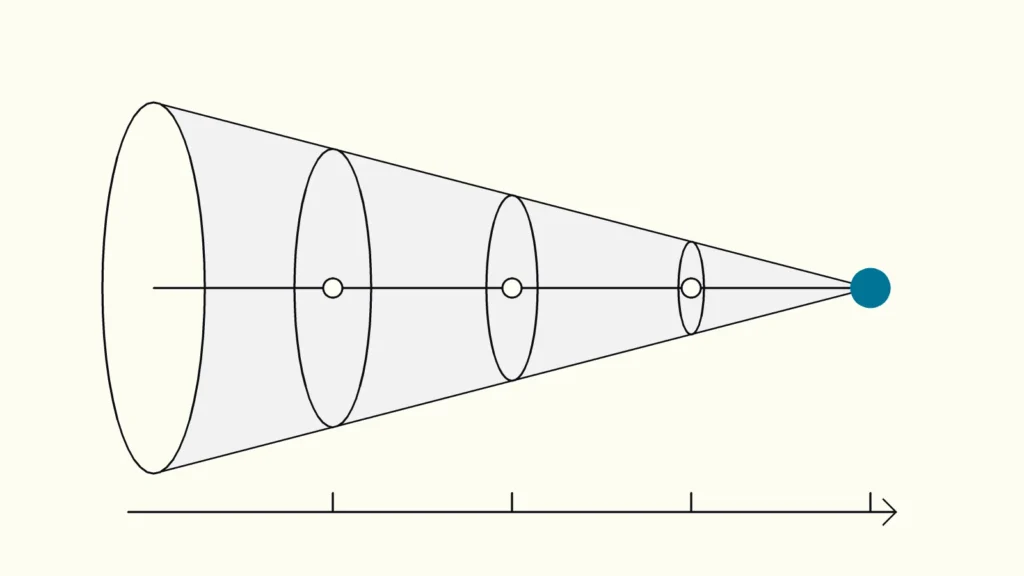
Steve McConnell's work on the cone of uncertainty puts numbers on the first point. At the initial concept stage, even skilled estimators can be off by a factor of 4x on the high side or 0.25x on the low side, a 16x total range. The cone narrows only as decisions remove variability: committing to a product vision, including what you will not do, then requirements, then design. McConnell also stresses that the cone is a best case. A project that does not make those decisions stays in a "cloud" of uncertainty to the end.
Four further causes show up in almost every project:
- Optimism. People estimate the happy path and forget rework, reviews, environments and waiting.
- Invisible work. Integration, data migration, security, accessibility, deployment and support are left out because nobody listed them.
- Changing scope. New requirements arrive, but the original date stays.
- Anchoring. Once a leader mentions a hoped-for date, estimates drift towards it.
What is a software estimate for?
A software estimate is a forecast of effort or time, with a range of uncertainty, made to support a specific decision. Martin Fowler sums up the useful test in Purpose of Estimation: estimation is valuable when it helps you make a significant decision, so always clarify which decision the estimate informs.
Typical decisions are whether to fund a project at all, which of two options to build, when to plan a launch, or how many people to staff. Each needs a different precision. A go or no-go decision may need only an order of magnitude; a coordinated launch with marketing needs a much tighter forecast closer to the date.
Leaders also mix up four different things, and the confusion causes much of the conflict:
Term
What it is
Who owns it
Example
Estimate
What it is
An analytical forecast with a range
Who owns it
The team
Example
10 to 16 weeks, 80 percent confidence
Target
What it is
A business wish or need
Who owns it
Leadership
Example
Live before the trade fair in March
Commitment
What it is
A promise to deliver defined scope by a date
Who owns it
Team and leadership together
Example
Checkout and payments live by 1 March
Plan
What it is
How the work will be ordered and staffed
Who owns it
Team and product owner
Example
Payments first, then reporting
A healthy conversation keeps them separate. If the estimate does not fit the target, you change scope, staffing or date, not the estimate.
How to do software estimation step by step
Reliable software estimation follows a repeatable sequence: name the decision, break the work down, estimate in ranges from real data, list assumptions, and update as you learn. These eight steps work for a new product as well as a large feature.
- Name the decision. Write down what will be decided with the estimate and how precise it needs to be. If no significant decision depends on it, spend less effort.
- Break the work into thin slices. Describe the work as small, user-visible increments rather than technical layers. Smaller items are easier to compare with past work.
- Estimate ranges, not points. For each slice, give a likely, an optimistic and a pessimistic value. The width of the range is information, not weakness.
- Use your own history. Compare with similar work the team has finished, and with its actual throughput: how many items it completes per week. Past data beats expert opinion when the work is similar.
- Add the invisible work. Include testing, code review, integration, data migration, security, accessibility, environments, deployment and meetings. A checklist of these stops them from being forgotten.
- State the assumptions and risks. List what must be true for the range to hold, such as access to an API by a certain week, or a team of a given size.
- Forecast with throughput. Divide the remaining number of items by a range of observed throughput, or run a simple Monte Carlo simulation on past weekly throughput, to get dates with a confidence level.
- Re-estimate at milestones. Update the forecast after discovery, after the first release and at regular intervals. Each update should be narrower than the last; if it is not, the project is not reducing its uncertainty.
When the first estimate is very wide, the honest answer is often to fund a short discovery phase or a prototype first. Our comparison of a prototype, MVP or pilot shows which kind of first step reduces which kind of uncertainty.
How should leaders read and use estimates?
Leaders get the most from estimates when they ask for ranges with confidence levels, protect the date by flexing scope, and track how forecasts change over time. The behaviour of leadership decides whether teams give honest estimates or padded ones.
Some practical habits:
- Ask for a range and a confidence level. "Ten to sixteen weeks at 80 percent" is more useful than "twelve weeks", because it tells you how much buffer you need.
- Fix time, flex scope. If a date is truly fixed, prioritise the backlog so the most valuable slices ship first, and accept that lower-priority items may move.
- Do not punish wide ranges. If wide ranges lead to pressure, teams start padding or hiding uncertainty, and you lose the signal.
- Watch the trend. A forecast that keeps sliding is an early warning. Ask what is causing it: scope growth, unexpected complexity, or old code that is harder to change than expected. Our article on technical debt as a business risk covers the last case.
- Compare forecast with actual. Review a few finished projects each year. Teams that see their own track record estimate better.
Estimates also look different depending on how you buy development. A fixed-price project moves the risk to the supplier, who prices it in; a team on time and materials shares the risk with you. Our comparison of an IT consultant, a development team or project delivery explains that trade-off, and our guide to the digital product development process shows where estimates fit between idea and release.
Keep reading
From our work
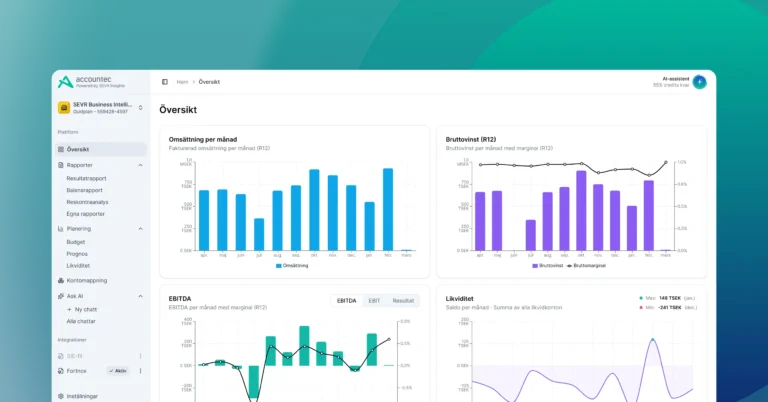 Client Case: SEVR InsightsLearn how Devies and SEVR Insights built an AI accounting platform in four months using an AI-first development process that reached 85,000 users.Read the case
Devies
Want a second opinion?
Devies, a Gothenburg-based product and engineering consultancy, works on questions like this with Nordic product and IT teams. Tell us where you are and we will suggest a sensible first step.
Frequently asked questions
Why are software estimates always wrong?
Estimates are often wrong because they are made early, when the least is known, and presented as single numbers. At the concept stage the realistic range can span a factor of sixteen from low to high. Optimism, forgotten work such as testing and integration, and scope changes add to the gap. Estimates improve when they are given as ranges and updated as decisions remove uncertainty.
Should we use story points or hours?
Both can work if they are used consistently. Story points compare relative size and avoid debates about individual speed, while hours are easier to explain to finance. For forecasting delivery dates, many teams get better results by counting finished items per week and using that throughput, which needs no conversion at all. Choose the simplest method that supports the decisions you need to make.
How accurate can a software estimate be?
Accuracy depends on how much is decided. At the initial concept stage, McConnell's cone of uncertainty puts the best-case range at 0.25x to 4x of the final result. Once requirements and design are settled, and the team has delivery history on similar work, forecasts within roughly 25 percent are realistic. Projects that never settle key decisions do not reach that level, however carefully they estimate.
What is the #NoEstimates approach?
#NoEstimates is a movement that questions detailed up-front estimation. Instead of estimating each item, teams split work into small, similarly sized pieces and forecast from how many they finish per week. It works well for stable teams with steady delivery. It does not remove the need to answer leadership's questions about cost and timing; it answers them with data instead of guesses.