UX is one of the most used and least defined words in product development. This is what it actually means, how UX design work is done and how you can tell whether it is working.
In short
UX, short for user experience, is everything a person experiences when they use a product or service and deal with the company behind it. UX design is the practice of shaping that experience on purpose: understanding users and their goals, designing flows and content around them, and testing with real people until they can reach those goals with little effort.
UX design is often reduced to "making screens look nice", which is the part of the work it is least about. This explainer is written by Devies, a Gothenburg-based product and engineering consultancy, for leaders who keep hearing the term in roadmaps, job ads and agency proposals and want a clear, practical definition. It explains what user experience covers, how the work is done, how to measure it and which common beliefs lead teams astray.
What does UX mean?
UX means user experience: the sum of a person's interactions with a product, its service and the company that provides it, including what they feel and whether they reach their goal.
The most quoted definition comes from Don Norman and Jakob Nielsen at Nielsen Norman Group: user experience "encompasses all aspects of the end-user's interaction with the company, its services, and its products". Two things follow from that sentence. First, UX is not limited to the screen; delivery times, invoices, error emails and the support phone line all belong to it. Second, UX is something every product has, whether anyone designed it or not. The only choice is whether it is shaped deliberately.
In Swedish the term is often translated as användarupplevelse, but most Swedish product teams use the English abbreviation.
UX design is the deliberate work of shaping that experience. It covers research into who the users are and what they are trying to do, the structure and flow of the product, the content and wording, and repeated testing to check that the design works for real people.
How is UX different from UI, usability and service design?
UX is the broadest of these terms: UI, usability and accessibility are qualities or layers inside it, and service design extends it across channels and behind the scenes. The table separates the concepts that are most often confused.
Term
What it is
Question it answers
UX (user experience)
What it is
The whole experience of using a product and dealing with the company
Question it answers
Does this help people reach their goal, and how does it feel?
UI (user interface)
What it is
The screens and controls people operate
Question it answers
Is the interface clear, consistent and easy to operate?
Usability
What it is
A quality of the interface: easy to learn, efficient, pleasant
Question it answers
Can people complete specific tasks without trouble?
Accessibility
What it is
Whether people with disabilities can perceive, operate and understand the product
Question it answers
Can everyone use it, including with assistive technology?
Service design
What it is
The design of the whole service, front stage and back stage, across channels
Question it answers
Do the people, processes and systems behind the product support the experience?
Nielsen and Norman make the same distinction: usability is a quality attribute of the UI, while total user experience is an even broader concept. Our comparison of UX vs UI design covers the hiring side of the UX and UI split in more detail.
What does UX design work involve?
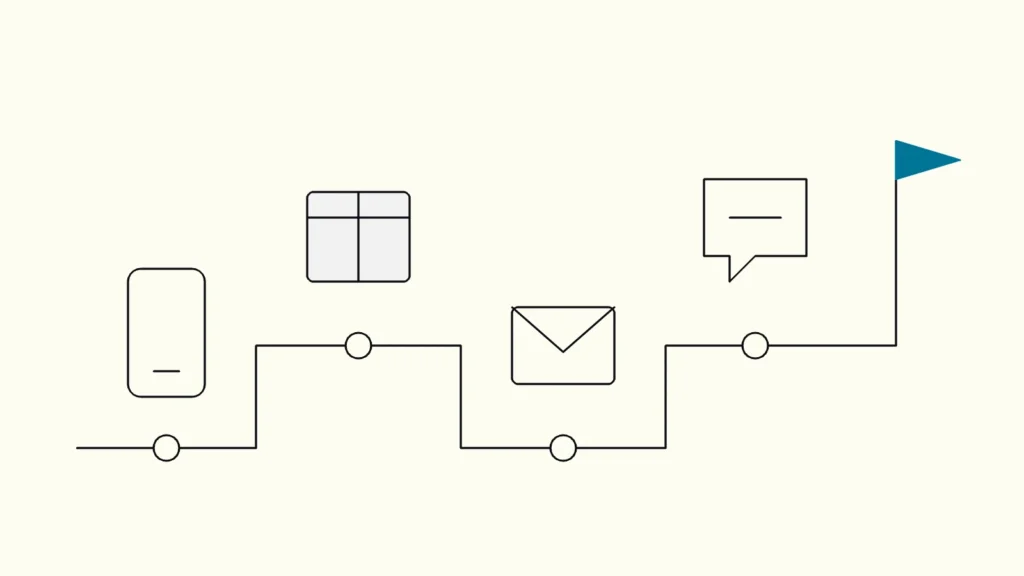
UX design work follows a human-centred cycle: understand users, define the problem, design a solution, test it with real people and repeat until it works. The UK government's Service Standard opens with the same priorities: understand users and their needs, solve a whole problem for users, provide a joined up experience across all channels, and make the service simple to use.
In practice, the cycle has five steps:
- Understand users and context. Interviews, observation, analytics and support data show who the users are, what they are trying to achieve and where they get stuck. Our overview of UX research methods helps match the method to the question.
- Define the problem. Write down the user goal, the business goal and how success will be measured, before any screens exist.
- Design the structure and flow. Information architecture, user flows and wireframes decide what goes where and in which order.
- Prototype and test. A clickable prototype is tested with a handful of representative users. Most serious problems appear in the first few sessions.
- Ship, measure and iterate. After release, task success, drop-off and support contacts show whether the design works at scale, and the cycle starts again for the next problem.
The steps overlap, and a small team may go through all five in a week for a single feature. What makes it UX design rather than guesswork is that each round is checked against evidence from real users.
How do you measure good UX?
Good UX is measured by whether people complete their tasks, how much effort it takes and how they feel about it, not by how attractive the screens look. The most useful measures combine behaviour and attitude:
- Task success rate: the share of users who complete a key task, such as signing up or placing an order.
- Time on task: how long a key task takes, compared before and after a change.
- Error rate: how often people make mistakes, enter invalid data or go back.
- Drop-off: where in a flow people abandon it.
- Support contacts: how many questions or complaints a flow generates.
- Satisfaction: short surveys after a task, interpreted alongside behaviour rather than on their own.
Pick two or three measures per flow and track them over time. A single number for "the UX" of a whole product hides more than it shows. Small, regular usability tests are the cheapest way to get qualitative evidence; our guide to usability testing on a budget shows a lightweight method.
What are the most common myths about UX?
The most common myths treat UX as a phase, a person or a coat of paint, when it is a way of working that runs through the whole product.
- "UX is how it looks." Visual design matters, but a beautiful product that solves the wrong problem still fails. Most UX value is decided before visual design begins.
- "We are the users, so we know." Teams know their product too well to see it as a newcomer does. Watching five real users is usually humbling.
- "UX is a phase before development." Research and testing are most valuable when they continue after release, when real usage data arrives.
- "Good UX needs a big budget." A few interviews, a paper prototype and a short test session cost little compared with building the wrong feature.
- "Accessibility is a separate project." A product that some users cannot operate has a poor experience for them by definition. W3C notes that accessible design also helps people with situational limitations, such as bright sunlight, and older people with changing abilities.
- "The UX designer owns UX." Product owners, developers and support staff all shape the experience. The designer makes the work visible and testable, but cannot deliver good UX alone.
Keep reading
From our work
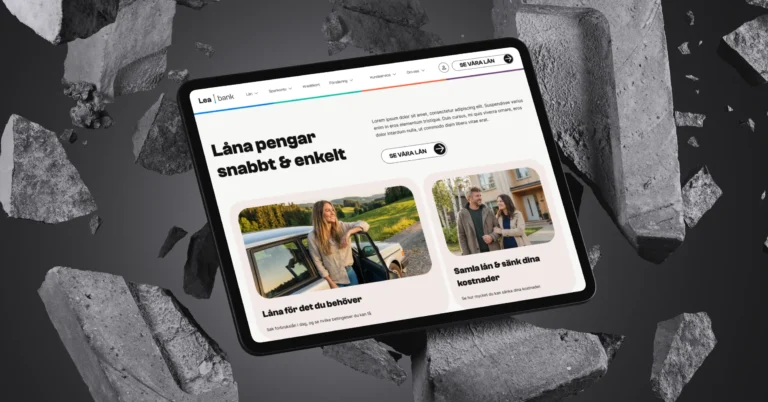 Client Case: Lea BankLea Bank rebuilt its digital platform with Strapi, React, GrowthBook, GA4, and BigQuery to improve SEO, A/B testing, and marketing autonomy.Read the case
Devies
Want a second opinion?
Devies, a Gothenburg-based product and engineering consultancy, works on questions like this with Nordic product and IT teams. Tell us where you are and we will suggest a sensible first step.
Frequently asked questions
What is the difference between UX and UX design?
UX, or user experience, is the experience itself: everything a person encounters when using a product and dealing with the company behind it. Every product has a UX, good or bad. UX design is the deliberate practice of shaping that experience through research, structure, flows, content and testing with real users. In everyday use the two terms are often mixed, but the distinction helps when deciding who owns what.
What does a UX designer do?
A UX designer works out who the users are and what they need, then designs the structure and flow of a product so they can reach their goals. Typical work includes interviews and observation, journey maps, information architecture, wireframes, clickable prototypes and usability tests. A UX designer works closely with product owners and developers, and checks after release whether the design actually works as intended.
Is UX design only for digital products?
No. The term is used most in software, but the idea applies to any product or service people use: a self-service terminal, a delivery process, an invoice or a support call. Nielsen Norman Group's definition explicitly includes the company and its services, not only the interface. Service design extends the same thinking to the people and processes behind the scenes.
How long does UX design take?
UX design is not a fixed phase, so there is no single answer. A small feature can go from problem to tested prototype in one or two weeks. A new product usually needs several weeks of research and iteration before development starts in earnest. After release, UX work continues in short cycles as real usage data shows where people still struggle.